INSIGHTS
Europe's Aviation Fuel Problem May Have a Latvian Fix
KBR licenses PureSAF tech to NorSAF for Northern Europe's largest SAF facility, targeting 100,000 tons annually from 2030
22 Jun 2026
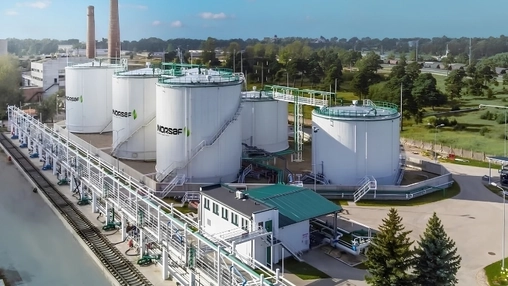
Northern Europe's aviation fuel landscape is shifting fast. KBR has licensed its proprietary PureSAF technology to NorSAF for a landmark facility in Latvia, which will become the region's largest sustainable aviation fuel production plant. Targeting 100,000 tons of annual output by 2030, the deal positions Europe to sharply reduce its reliance on fossil fuel imports at a moment when global supply chains remain volatile.
Feedstocks for the plant will come entirely from within Europe. Advanced bioethanol and green hydrogen form the core inputs, combining regional abundance with low-carbon credentials that align directly with European energy sovereignty goals. Swedish Biofuels, whose proprietary chemistry underpins the conversion process, adds further regional depth. Drawing on locally sourced materials, the project demonstrates that large-scale SAF production no longer depends on imported fossil-derived resources.
Jānis Kisiels, Board Member of NorSAF, described the project as building "a resilient, self-sufficient energy ecosystem that reduces our dependence on external fossil fuel markets and strengthens Europe's industrial backbone." That framing resonates strongly with policymakers who have pushed hard for domestic clean-fuel capacity since the supply shocks of recent years. Aviation operators across the continent also stand to gain a reliable, drop-in fuel source that meets tightening sustainability mandates without requiring engine or infrastructure changes.
Commercially, the implications run deep. For businesses across aviation and logistics, a verified domestic supply of 100,000 tons per year represents a meaningful step toward meeting blending targets under European Union fuel regulations.
KBR, meanwhile, secures a marquee European reference project that reinforces its competitive position in a global SAF licensing market analysts expect to expand rapidly through the decade. With construction milestones still ahead, the Latvia facility offers a compelling proof point: advanced biofuel infrastructure can be built at commercial scale using homegrown resources.
Related News


topics on the agenda
LATEST TRENDS IN FEDERAL AND STATE BIOFUELS POLICY
DAY 1: undefined
09:00 - 09:25
DE-RISKING THE BIOFUELS VALUE CHAIN: TRADE, TECHNOLOGY, AND CAPITAL
DAY 1: undefined
09:30 - 09:55
FOOD VS. FUEL: CONFLICT OR SYNERGY?
DAY 1: undefined
11:30 - 11:55
SUBSCRIBE FOR UPDATES
By submitting, you agree to receive email communications from the event organizers, including upcoming promotions and discounted tickets, news, and access to related events.